Quick Answer
Skip the airport duty-free and hit the dedicated Kavas (liquor shops) in Rhodes Town for the best selection of international whiskies. You will find superior curation and better pricing at independent retailers like those found near Mandraki Harbor compared to supermarket chains.
- Prioritize independent ‘Kava’ shops over supermarkets for rare bottlings.
- Avoid airport duty-free for anything other than specific travel retail exclusives.
- Check the labels for European import stickers to ensure authenticity and proper provenance.
Editor’s Note — Rachel Summers, Digital Editor:
I firmly believe that buying alcohol at an airport is a sucker’s game unless you are hunting for a specific limited release you can’t find anywhere else. Most people miss the fact that independent retailers in Mediterranean hubs often hold back incredible allocations specifically for local enthusiasts, not tourists. I’ve been saying for years that the best souvenir isn’t a magnet, it’s a bottle you can’t get at home. Lena Müller is the only person I trust to navigate this because she treats a bottle shop like a classroom. Follow her lead and get out of the resort bubble to find your next favorite dram.
The air in Rhodes carries the sharp, salt-crusted tang of the Aegean, but step inside a well-regarded Kava on a side street off Mandraki Harbor and the atmosphere shifts. The scent of sun-warmed limestone is replaced by the dry, wood-heavy promise of oak, malt, and peat. It’s a sensory contrast that defines the experience of sourcing spirits on this island. You aren’t here for the local ouzo. You are here to navigate a retail environment that balances high-volume tourist demand with the sophisticated tastes of a growing local collector base.
If you want to find quality whiskey in Rhodes, you must abandon the convenience of resort-adjacent supermarkets. The island’s true gems hide in plain sight, tucked away in family-run shops that prioritize curation over mass-market volume. According to the Oxford Companion to Beer and broader spirit trade guidelines, the integrity of a bottle depends entirely on storage conditions—heat is the enemy of fine spirits. In a climate where summer temperatures routinely exceed 30°C, the shops that invest in climate-controlled shelving are the only ones worthy of your money. Take your business to those who treat their inventory with the reverence due to a fine Bavarian lager or a cask-strength single malt.
The BJCP (Beer Judge Certification Program) guidelines for judging flavor profiles are equally applicable to spirits; you are looking for clarity, lack of oxidation, and proper sealing. When you enter a shop, look for dust-free shoulders on the bottles. If the labels look sun-bleached, walk out. This is a sign of improper display in direct sunlight, which effectively kills the volatile aromatics that make a whiskey worth drinking in the first place. I recommend focusing your efforts on the independent Kava stores located in the modern city sectors of Rhodes, rather than the Old Town, where ‘tourist tax’ pricing is rampant and turnover is often too slow to guarantee quality.
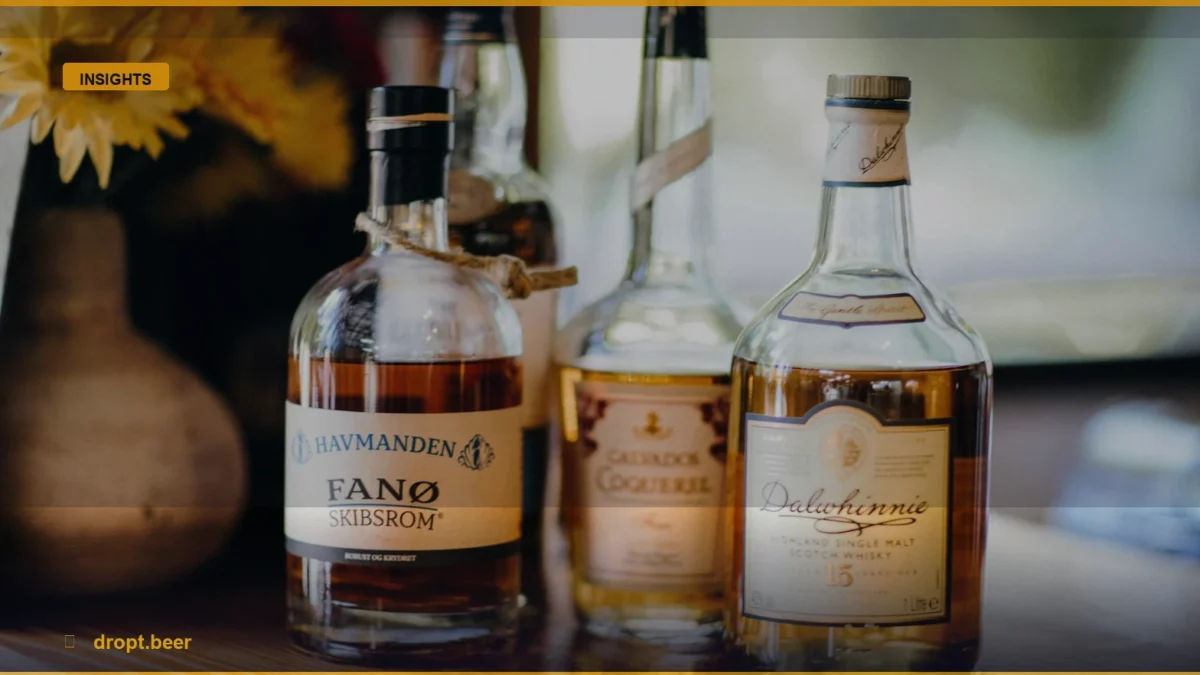
You’ll notice that international brands dominate the shelves here, with a heavy emphasis on Scotch and an increasing presence of Japanese whisky. However, do not be fooled by the presence of ‘travel retail’ versions in local shops. These are often lower-ABV bottlings designed for high-volume duty-free sales. If you find a bottle of something like a standard expression from a distillery like Lagavulin or Nikka, compare the ABV against what you know from home. If it’s significantly lower—say, 40% when you know it should be 43%—you are looking at a product formulated specifically for the mass market. Stick to the core range expressions that carry the integrity of the original distillery profile.
Finally, engage the proprietor. In Greece, the culture of the Kava owner is one of hospitality and pride. If you show curiosity about their selection—specifically asking about their ‘premium’ or ‘aged’ stock—you’ll often find them unlocking cabinets that aren’t on display. It’s a practice that reminds me of the best bottle shops in Munich. They want to sell to someone who cares. If you approach the purchase as a dialogue rather than a transaction, you’ll find that the best bottles in Rhodes aren’t just for sale; they’re waiting for the right person to take them home. Treat the search as part of the experience, and you’ll find that the bottle you open back at your accommodation tastes all the better for the effort it took to find it. Keep reading dropt.beer for more guides on finding top-tier bottles in unexpected corners of the globe.
Your Next Move
Prioritize independent, climate-controlled liquor stores (Kavas) in the residential areas of Rhodes Town over supermarket aisles or airport duty-free.
- [Immediate — do today]: Use Google Maps to search for “Kava” in the Neohori district and check the most recent reviews for mentions of “whiskey” or “single malt.”
- [This week]: Visit a shop and ask the owner for their recommendation for a local favorite, not just an international brand, to test their expertise.
- [Ongoing habit]: Always check the bottle shoulder for sun-fading and the label for ABV consistency before handing over your credit card.
Frequently Asked Questions
Is airport duty-free cheaper for whiskey in Rhodes?
While airport prices are tax-free, they are rarely cheaper for standard expressions. You are paying for convenience. Most airport inventory is geared toward high-volume, mainstream brands. You will rarely find rare, independent, or higher-end aged releases at the airport, and the markup on common bottles often negates the tax savings.
Should I buy Greek whiskey in Rhodes?
While Greece is world-famous for Ouzo and Tsipouro, the local whiskey scene is nascent. If you see a “Greek whiskey,” treat it as a curiosity. It is unlikely to compete with established Scotch or Japanese producers. Focus your budget on high-quality international imports that are well-stored, as those are the actual highlights of the local retail scene.
How do I know if a bottle has been heat-damaged?
Look for signs of prolonged sun exposure: faded labels, glue residue that has turned yellow or brittle, and corks that appear pushed slightly out of the neck. If the bottle feels warm to the touch or is displayed in a window under direct sunlight, the heat has likely caused the alcohol to expand and contract, potentially damaging the seal and accelerating oxidation.
Are supermarket whiskies in Greece worth buying?
Only for basic, high-volume blends or standard entry-level bourbons. Supermarkets like AB Vassilopoulos are fine for a casual bottle you plan to drink on the beach, but they lack the temperature control and curation required for premium or investment-grade whiskies. Never buy a rare or expensive bottle from a supermarket shelf.